Converged or Best of Breed Identity Security: What Works and When Identity problems start with small things that don’t look dangerous at first, for instance, a privileged account appearing on a machine it should never access, service account with rights that have nothing to do with its job, or a cloud role no one remembers approving. These little signs add up. They show that identity has grown too fast, spread too wide, and now lives across too many tools to control cleanly.
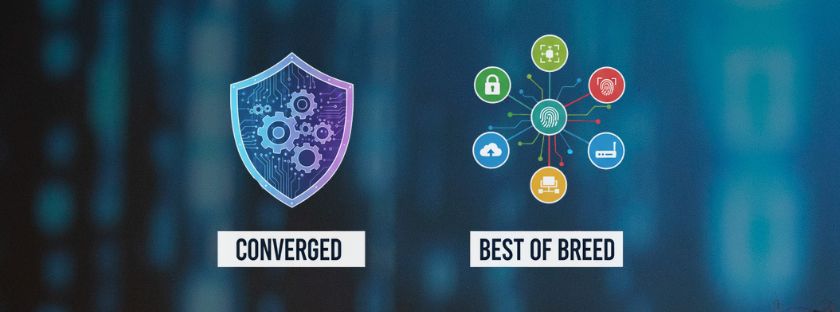
This blog breaks down the two real paths left at that point, bringing identity into one converged system that sees everything, or stitching together best-of-breed tools that give depth at the cost of complexity, so you can choose the structure that keeps your environment predictable, visible, and safe.
Why Identity Architects Keep Reaching the Same Breaking Point?
Modern identity programs face pressure from three directions at once:
Cloud scale: Each cloud platform creates entitlements differently. AWS IAM, Azure RBAC, Google IAM, and SaaS RBAC models follow different logic, inheritance rules, and naming patterns.
Hybrid complexity: Legacy AD, cloud directories, on-prem apps, SaaS platforms, and privileged systems do not share a common identity language. Every connector translates, reshapes, and reinterprets identity.
Operational fatigue: Identity teams now juggle provisioning, deprovisioning, reviews, drift detection, entitlement mapping, cloud role changes, privileged access monitoring, service account oversight, and identity intelligence, all while the environment continues to expand.
Identity is no longer as clean. It is now “close enough. “And “close enough” is all that is required by an attacker. The choice between converged and best-of-breed is a question of how much complexity your environment can tolerate before it becomes unpredictable.
Where Converged Platforms Change the Identity Story
A converged platform builds identity on one architecture that spans:
- Joiner-mover-leaver lifecycle
- Access requests
- Provisioning and deprovisioning
- Cloud entitlements
- Privileged access
- Activity trails
- Anomaly detection
- Policy enforcement
- Service account behavior
- Identity intelligence
Everything lives in one model instead of separate tools trying to synchronize meaning. This makes the identity coherent.
Converged Identity Creates a Single Source of Truth
The first and most important shift is visibility. Not more dashboards. Just one place where the truth about access, roles, privileges, and activity resides. The moment that single source exists; three things happen:
- Drift becomes visible.
- Unused rights stand out.
- Privilege jumps become obvious.
- Cloud role expansion is seen early instead of weeks later.
- Investigations stop bouncing between tools.
- You do not reconstruct a timeline across PAM, IGA, CIEM, cloud logs, and local logs.
- You read the full sequence in one trail.
- Governance becomes predictable instead of conditional.
- Requests follow one flow.
- Reviews follow one process.
- Approvals follow one logic.
- Every identity system speaks the same language.
Identity becomes something you can reason about instead of something you have to chase.
Converged Architecture Reduces Blast Radius by Design
When identity is fragmented, an attacker only needs one gap.
- A stale cloud role.
- A privileged group membership no one tracks.
- A service account with forgotten rights.
- A workstation with cached credentials.
A converged platform collapses these escape routes by keeping privilege, entitlements, service accounts, and workload identity changes in the same model. You see how rights relate to each other, not just how they appear in isolation.
The blast radius shrinks because it becomes harder for unnecessary rights to exist without being noticed.
Converged Identity Lightens Operational Pressure
Teams spend less time:
- Stitching logs
- Rebuilding timelines
- Reconciling mismatched role definitions
- Revalidating sync issues
- Repeating the same review in different tools
- Managing multiple upgrade cycles
- Preserving context across systems
Identity stops feeling like a stack of tools. It starts feeling like a system.
Where Best-of-Breed Tools Offer Precision, You Cannot Ignore
Best-of-breed has a real advantage, specialization. Specialist tools go deeper in their niche:
- Privileged session control
- Cloud entitlement mapping
- Secrets automation
- Complex approval logic
- Advanced governance models
- High-detail analytics
- Risk scoring on per-grant and per-action levels
If your environment has unique regulatory needs, deeply custom workflows, or unusual infrastructure requirements, best-of-breed will give you controls that converged platforms don’t always match.
Best-of-Breed Works When You Need Extreme Depth
This approach is valuable when your environment demands:
- Advanced PAM logic
- Industry-specific governance
- Fine-grained cloud identity context
- Specialized separation-of-duty rules
- Workload identity oversight
- Deep protocol-level controls
If you need these capabilities right now, you cannot wait for them to appear inside a converged platform.
Precision Comes With Structural Costs
Fragmentation shows itself slowly:
- Identity meaning drifts across tools.
“Role” means one thing in cloud. Another in governance. Another in PAM. Another in SaaS RBAC.
- Incident timelines scatter.
You get five streams of “truth,” each correct alone but misleading together.
- Connectors become structural risks.
When they lag by hours or break, the environment moves without the tools noticing.
- Reviews lose cohesion.
Cloud reviews succeed. Privileged reviews succeed. SaaS reviews succeed.
But none of them share context, which means none of them tell the whole truth.
Intelligence becomes incomplete
An anomaly in one tool doesn’t automatically correlate with behavior in another.
Best-of-breed can absolutely work, but only when supported by a large, highly skilled identity team with the time, engineering discipline, and operational maturity to keep everything aligned.
The Three Architectural Forces That Decide the Right Path
Whether you go converged or best-of-breed comes down to three forces:
1. Visibility: Can You See Risk Before It Becomes an Incident?
Identity visibility is not the ability to pull logs, but the ability to understand what those logs mean without cross-referencing five systems.
Converged platforms show
- Rights
- Changes
- Ownership
- History
- Privilege paths
- Activity
- Anomalies
- sage
in the same narrative.
Best-of-breed shows deeper detail, but in separate narratives that must be mapped together.
2. Governance: Can You Maintain Predictability Across Everything?
Governance collapses when rules scatter. In converged systems:
- workflows align
- approval logic repeats
- reviews behave the same
- certifications use full context
- deprovisioning is complete by default
In best-of-breed systems:
- cloud has one model
- PAM has another
- IGA has a third
- SaaS apps have their own
- connectors don’t always interpret changes the same way
Predictable governance is hard when everything speaks a different dialect of identity.
3. Blast Radius: How Fast Can Access Multiply Without Anyone Seeing It?
Identity drift is a slow accumulation of rights that gain weight over time. A converged system sees these movements early. A best-of-breed system often sees them late, or not at all, unless someone stitches patterns manually.
Blast radius grows when:
- entitlements multiply
- privileges persist
- service accounts age
- abandoned roles stay active
- cloud permissions expand
- identities move across environments without consistent governance
Architecture decides whether these movements are visible or silent.
How Each Architecture Behaves When Things Break
These are the realities identity teams face every week.
A cloud entitlement expands quietly
Converged:
Shows the change, actor, source, and downstream impact immediately.
Best-of-breed:
- Cloud tool catches it.
- Governance tool lags.
- Privileged analytics don’t correlate.
- Incident timeline becomes guesswork.
An application is added or removed from the environment
Converged:
- Usually requires updating or maintaining a single connector layer.
- Coverage extends quickly, and context stays consistent as the environment evolves.
Best-of-breed:
- Each tool may require its own connector.
- PAM, IGA, CIEM, and analytics may all need separate integration work.
- Maintenance becomes ongoing.
- Specialized expertise is required just to keep visibility intact.
A service account starts behaving strangely
Converged:
Usage, rights, owner, and connected systems appear together.
Best-of-breed:
- Rights appear in one tool.
- Activity appears in another.
- Purpose appears nowhere.
A lateral movement attempt hits privileged access
Converged:
Escalation, event chain, and identity trail are unified.
Best-of-breed:
Pieces live everywhere.
By the time the timeline is rebuilt, the moment has passed.
How to Choose the Right Tool Without Guessing
Here is the deeper decision framework that works in real environments:
This matrix is grounded in actual patterns seen across large identity environments.
Concrete tests you can run this week
Run these hands-on checks. Each one takes under a day.
Test 1. Timeline test
Force a tiny change, i.e, create a user, add the user to a nested group, trigger a sign in from a secondary location, and run a service account job. Then try to rebuild the full story from your tools. Can you show the sequence in one timeline within 15 minutes? If not, you lack joined-up context.
Test 2. Raw data test
Ask each tool to export the raw event for the same action. Compare fields and timestamps. Do you lose fields during ingestion? Are timestamps consistent? If fields are missing or changed, you lose precise forensics.
Test 3. Service account test
List the service identities in your directory. Run a baseline of their normal actions for a week. Flag any use outside that baseline. If your tools treat service accounts like normal users and not as high risk identities, you will miss abuse.
Test 4. Forensic replay test
Simulate a small incident and time how long it takes your team to build a full replay of the event. If it takes more than an hour, you will pay for that time during a real incident.
These tests show whether converged or best of breed fits your capacity and controls.
How ObserveID helps you cover the gaps
ObserveID helps by giving you a single place to see identity activity across cloud and on-prem without losing raw detail. With 100+ prebuilt connectors, it ingests data from most systems you already run and scales as applications are added or removed. Instead of maintaining multiple connectors across separate tools, a single connector layer updates coverage and keeps context intact. You track human accounts, service accounts, roles, group changes, and logins in one timeline, making it easier to catch the small steps that build a threat.
This also works when you operate a best-of-breed stack. Many organizations keep specialized PAM, CIEM, or governance tools but still need a unified story. ObserveID acts as an orchestration engine that sits above those tools, creating an identity warehouse that aligns users, rights, and activity. You maintain depth where you need it while gaining audit-ready reporting and full context fast, reducing blind spots and operational effort as environments evolve.
Conclusion
Your identity security approach should match your team’s real capacity and your actual threats. If you’re spending more time managing tools than securing systems, something’s wrong. Choose the path that gives you visibility, control, and room to grow. Everything else is details.
If you want to see this level of clarity in your own environment, book a quick demo with us, today.
FAQs (Frequently Asked Questions)
1. What is the main difference between a converged identity platform and a best of breed stack?
A converged platform puts cloud and on prem identity signals in one timeline. You see users, service accounts, rights and changes in the same place. A best of breed stack uses separate tools for each task. You get deep checks in each part, but you must stitch signals to see the full story. The right choice depends on how fast you need to rebuild the thread behind an alert.
2. Why do identity tools disagree with each other when they show user access or group counts?
People ask this a lot because it makes them doubt every alert they get. The reason is simple. Each tool gathers identity data at a different time, with a different method, and from a different place. One tool reads cached rights. Another reads live rights. Another updates on a schedule. When these numbers drift, you see mismatched user counts or outdated group lists. This is normal in split stacks. The fix is to use a setup that reads raw changes from the source and keeps timestamps aligned.
3. What should I check first if I think an identity threat is active but I do not know where it started?
Start with three quick checks. Look at new sign ins from strange places. Look at recent group changes involving high rights. Look at any service account that acted at a new time. These three points often reveal the first clue in a wider chain. You can trace the full story once you find the first odd move.
4. How do I get a unified view if I already use best-of-breed tools?
Many teams choose best-of-breed because they need deep control in areas like PAM or cloud entitlements. The challenge comes when they need a single view across all those systems. The most effective path is to place an orchestration layer on top of the existing stack that reads raw identity changes directly from each source. ObserveID works this way. It builds an identity warehouse that aligns users, service accounts, rights, and activity without forcing you to replace the tools you already depend on. You keep specialization but gain a unified narrative when investigating an alert.